
By Bian Xiyue
Si Jie which is well known for Nantong Tianning Temple, is the center of old city of Nantong for hundreds of years. Now it is no longer prosperous, only weathered streets are left.
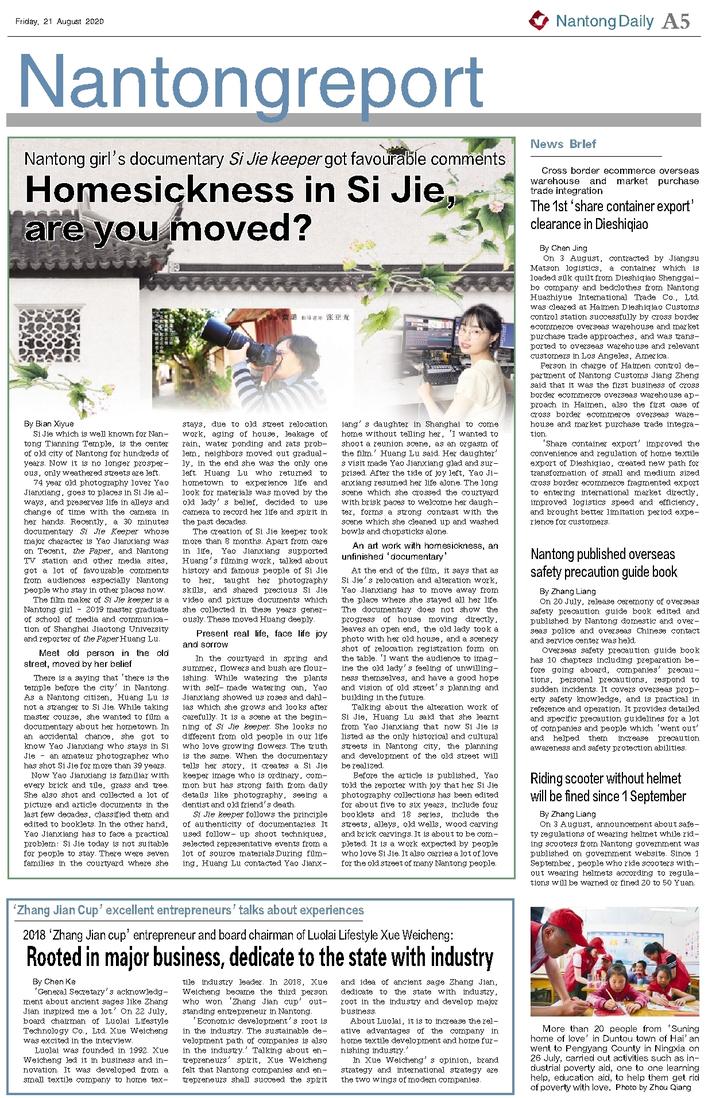
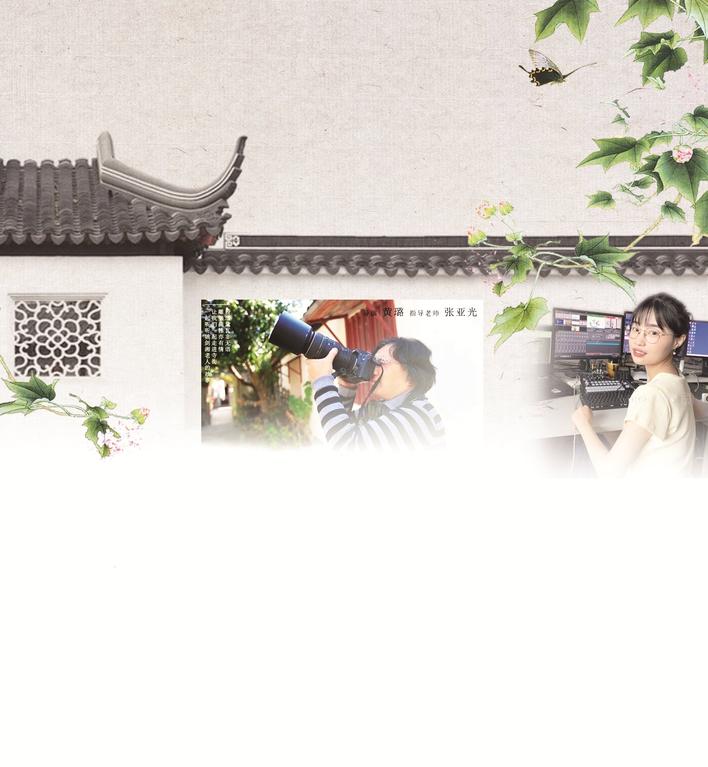
74 year old photography lover Yao Jianxiang, goes to places in Si Jie always, and preserves life in alleys and change of time with the camera in her hands. Recently, a 30 minutes documentary Si Jie Keeper whose major character is Yao Jianxiang was on Tecent, the Paper, and Nantong TV station and other media sites, got a lot of favourable comments from audiences especially Nantong people who stay in other places now.
The film maker of Si Jie keeper is a Nantong girl – 2019 master graduate of school of media and communication of Shanghai Jiaotong University and reporter of the Paper Huang Lu.
Meet old person in the old street, moved by her belief
There is a saying that ‘there is the temple before the city’ in Nantong. As a Nantong citizen, Huang Lu is not a stranger to Si Jie. While taking master course, she wanted to film a documentary about her hometown. In an accidental chance, she got to know Yao Jianxiang who stays in Si Jie – an amateur photographer who has shot Si Jie for more than 39 years.
Now Yao Jianxiang is familiar with every brick and tile, grass and tree. She also shot and collected a lot of picture and article documents in the last few decades, classified them and edited to booklets. In the other hand, Yao Jianxiang has to face a practical problem: Si Jie today is not suitable for people to stay. There were seven families in the courtyard where she stays, due to old street relocation work, aging of house, leakage of rain, water ponding and rats problem, neighbors moved out gradually, in the end she was the only one left. Huang Lu who returned to hometown to experience life and look for materials was moved by the old lady’s belief, decided to use camera to record her life and spirit in the past decades.
The creation of Si Jie keeper took more than 8 months. Apart from care in life, Yao Jianxiang supported Huang’s filming work, talked about history and famous people of Si Jie to her, taught her photography skills, and shared precious Si Jie video and picture documents which she collected in these years generously. These moved Huang deeply.
Present real life, face life joy and sorrow
In the courtyard in spring and summer, flowers and bush are flourishing. While watering the plants with self-made watering can, Yao Jianxiang showed us roses and dahlias which she grows and looks after carefully. It is a scene at the beginning of Si Jie keeper. She looks no different from old people in our life who love growing flowers. The truth is the same. When the documentary tells her story, it creates a Si Jie keeper image who is ordinary, common but has strong faith from daily details like photography, seeing a dentist and old friend’s death.
Si Jie keeper follows the principle of authenticity of documentaries. It used follow-up shoot techniques, selected representative events from a lot of source materials.During filming, Huang Lu contacted Yao Jianxiang’s daughter in Shanghai to come home without telling her, ‘I wanted to shoot a reunion scene, as an orgasm of the film.’ Huang Lu said. Her daughter’s visit made Yao Jianxiang glad and surprised. After the tide of joy left, Yao Jianxiang resumed her life alone. The long scene which she crossed the courtyard with brisk paces to welcome her daughter, forms a strong contrast with the scene which she cleaned up and washed bowls and chopsticks alone.
An art work with homesickness, an unfinished ‘documentary’
At the end of the film, it says that as Si Jie’s relocation and alteration work, Yao Jianxiang has to move away from the place where she stayed all her life. The documentary does not show the progress of house moving directly, leaves an open end, the old lady took a photo with her old house, and a scenery shot of relocation registration form on the table. ‘I want the audience to imagine the old lady’s feeling of unwillingness themselves, and have a good hope and vision of old street’s planning and building in the future.
Talking about the alteration work of Si Jie, Huang Lu said that she learnt from Yao Jianxiang that now Si Jie is listed as the only historical and cultural streets in Nantong city, the planning and development of the old street will be realized.
Before the article is published, Yao told the reporter with joy that her Si Jie photography collections has been edited for about five to six years, include four booklets and 18 series, include the streets, alleys, old wells, wood carving and brick carvings. It is about to be completed. It is a work expected by people who love Si Jie. It also carries a lot of love for the old street of many Nantong people.